Sabtu, 26 November 2016

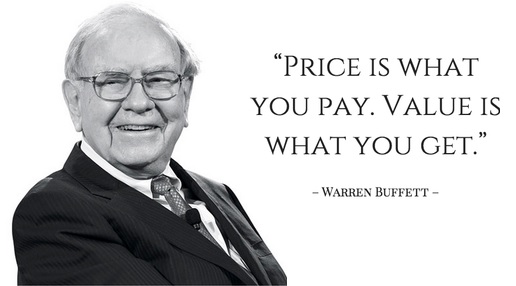
Warren Buffett


Image result for warren buffett


Synopsis

Born in Nebraska in 1930, Warren Buffett demonstrated keen business abilities at a young age. He formed Buffett Partnership Ltd. in 1956, and by 1965 he had assumed control of Berkshire Hathaway. Overseeing the growth of a conglomerate with holdings in the media, insurance, energy and food and beverage industries, Buffett became one of the world's richest men and a celebrated philanthropist.

Early Life

Businessman and investor. Born Warren Edward Buffett on August 30, 1930, in Omaha, Nebraska. Buffett's father, Howard, worked as stockbroker and served as a U.S. congressman. His mother, Leila Stahl Buffett, was a homemaker. Buffett was the second of three children and the only boy.
Buffett demonstrated a knack for financial and business matters early in his childhood. Friends and acquaintances have said the young boy was a mathematical prodigy who could add large columns of numbers in his head, a talent he occasionally demonstrated in his later years.
Warren often visited his father's stockbrokerage shop as a child, and chalked in the stock prices on the blackboard in the office. At 11 years old he made his first investment, buying three shares of Cities Service Preferred at $38 per share. The stock quickly dropped to only $27, but Buffett held on tenaciously until they reached $40. He sold his shares at a small profit, but regretted the decision when Cities Service shot up to nearly $200 a share. He later cited this experience as an early lesson in patience in investing.

First Entrepreneurial Venture

By the age of 13, Buffett was running his own businesses as a paperboy and selling his own horseracing tip sheet. That same year, he filed his first tax return, claiming his bike as a $35 tax deduction.
In 1942, Buffett's father was elected to the U.S. House of Representatives, and his family moved to Fredricksburg, Virginia, to be closer to the congressman's new post. Buffett attended Woodrow Wilson High School in Washington, D.C., where he continued plotting new ways to make money. During his high school tenure, he and a friend purchased a used pinball machine for $25. They installed it in a barbershop, and within a few months the profits enabled them to buy other machines. Buffett owned machines in three different locations before he sold the business for $1,200.

Higher Education and Early Career 

Buffett enrolled at the University of Pennsylvania at the age of 16 to study business. He stayed two years, moved to the University of Nebraska to finish up his degree, and emerged from college at age 20 with nearly $10,000 from his childhood businesses.
Influenced by Benjamin Graham's 1949 book, The Intelligent Investor, Buffett enrolled at Columbia Business School to study under the acclaimed economist and investor. After earning his master's degree in 1951, he sold securities for Buffett-Falk & Company for three years, then worked for his mentor for two years as an analyst at Graham-Newman Corp.
In 1956, Buffet formed the firm Buffett Partnership Ltd. in his hometown of Omaha. Utilizing the techniques learned from Graham, he was successful in identifying undervauled companies and became a millionaire. One such enterprise Buffett valued was a textile company named Berkshire Hathaway. He began accumulating stock in the early 1960s, and by 1965 he had assumed control of the company.

Business Empire

Despite the success of Buffett Partnership, its founder dissolved the firm in 1969 to focus on the development of Berkshire Hathaway. He phased out its textile manufacturing division, instead expanding the company by buying assets in media (The Washington Post), insurance (GEICO) and oil (Exxon). Immensely successful, the "Oracle of Omaha" even managed to spin seemingly poor investments into gold, most notably with his purchase of scandal-plagued Salomon Brothers in 1987.
Following Berkshire Hathaway's significant investment in Coca-Cola, Buffett became director of the company from 1989 until 2006. He has also served as director of Citigroup Global Markets Holdings, Graham Holdings Company and The Gillette Company.

Recent Activity and Philanthropy

In June 2006, Buffett made an announcement that he would be giving his entire fortune away to charity, committing 85 percent of it to the Bill and Melinda Gates Foundation. This donation became the largest act of charitable giving in United States history. In 2010, Buffett and Gates announced they had formed The Giving Pledge campaign to recruit more wealthy individuals for philanthropic causes.
In 2012, Buffett disclosed that he had been diagnosed with prostate cancer. He began undergoing radiation treatment in July, and successfully completed his treatment in November.
The health scare did little to slow the octogenarian, who annually ranks near the top of the Forbes world billionaires list. In February 2013, Buffett purchased H. J. Heinz with private equity group 3G Capital for $28 billion. Later additions to the Berkshire Hathaway stable included battery maker Duracell and Kraft Foods Group, which merged with Heinz in 2015 to form the third-largest food and beverage company in North America.
In 2016, Buffett launched Drive2Vote, a web site aimed at encouraging people in his Nebraska community to exercise their right to vote - and to assist in registering and driving voters to a polling location if they needed a ride. He’s been a vocal supporter of Democratic nominee Hillary Clinton, whom he’d endorsed in 2015. He also challenged the Republican nominee, Donald Trump, to meet and share their tax returns. "I will meet him in Omaha or Mar-a-Lago or, he can pick the place, anytime between now and election. I'll bring my return, he'll bring his return. We're both under audit. And believe me, nobody's going to stop us from talking about what's on those returns,” said Buffett at an August 1st rally in Omaha. Unlike other presidential candidates since the 1970s, to date, Trump has refused to make his tax returns public.


1. Where did Warren Buffett born?
           
     A. Nebraska.
     B. Bandung.
     C. Alaska.
     D. Pennsylvania.
     E. London.

2. Where did Warren Buffett go to high school?

     A. Woodrow Wilson High Shool.
     B. SMAN 3 Bandung.
     C. SMAN 5 Bandung.
     D. High School Musical.
     E. Albuquerque Academy.

3. What is Warren Buffett company name?

    A. Graham-Newman Corp.
    B. The Gillette Company.
    C. Bekshire Hathaway.
    D. Citigroup Global Markets Holdings.
    E. Graham Holdings Company.

4. When did Warren Buffett made an announcement that he would be giving his entire fortune away   to charity, committing 85 percent of it to the Bill and Melinda Gates Foundation?

    A. January 2010
    B. July 2006
    C. June 2012
    D. August 2015
    E. June 2006


5.   How old is Warren Buffett now?

    A. 84
    B. 85
    C. 76
    D. 86
    E. 64


Short Story

Hello folks!

I'm Syifa, and now i would like to tell you guys about a short story called The Rats and The Elephants, i find this story quite amusing and there's also the moral in it! well, lets just read the story now shall we?


The Rats and The Elephants
Once upon a time their lived a group of mice under a tree in peace. However, a group of elephants crossing the jungle unknowingly destroyed the homes of all the rats. Many of them were even crushed to death.
Then taking of rats decided to approach the elephant's chief and request him to guide his herd through another route. On hearing the sad story, the elephant's king apologized and agreed to take another route. And so the lives of the rats were saved.
One day elephant-hunters came to the jungle and trapped a group of elephants in huge nets. Then the elephant king suddenly remembered the king of the rats. He summoned on of the elephants of his herd, which had not been trapped, to go seek help from the king and told him about the trapped elephants.
The rat's king immediately took his entire group of rats and they cut open the nets which had trapped the elephant's herd. The elephant herd was totally set free. They danced with joy and thank the rats.
1. What type of text is the above text? It is …
A. a narrative text 
B. a description text
C. a recount text
D. an anecdote text
E. an expository text

2. What destroyed the homes of all rats?
A. a group of mice did
B. the hunter did
C. elephant-hunter did
D. a group of elephant did 
E. elephant's herd

3. What helped the elephant's herd free?
A. the elephant-hunter did
B. the hunters did
C. the trapped elephants did
D. a group of king did
E. entire group of rats did 

4. What is generic structure of "once upon a time there lived a group of mice under a tree in peace"? A. Identification
B. Orientation
C. Complication
D. Resolution
E. Description

5. At the end of the story, how was the elephant's herd?
A. angry
B. sad
C. happy
D. dead
E. disappointed


Hamster


 Hamsters are rodents belonging to the subfamily Cricetinae. The subfamily contains about 25 species, classified in six or seven genera. They have become established as popular small house pets, and partly because they are easy to breed in captivity, hamsters are often used as laboratory animals.


In the wild, hamsters are crepuscular and remain underground during the day to avoid being caught by predators. They feed primarily on seeds, fruits, and vegetation, and will occasionally eat burrowing insects. They have elongated cheek pouches extending to their shoulders in which they carry food back to their burrows.


                 History             

 Although the Syrian hamster or golden hamster (Mesocricetus auratus) was first described scientifically by George Robert Waterhouse in 1839, researchers were not able to successfully breed and domesticate hamsters until 1939. The entire laboratory and pet populations of Syrian hamsters appear to be descendants of a single brother–sister pairing. These littermates were captured and imported in 1930 from Aleppo in Syria by Israel Aharoni, a zoologist of the University of Jerusalem. In Jerusalem, the hamsters bred very successfully. Years later, animals of this original breeding colony were exported to the USA, where Syrian hamsters became one of the most popular pets and laboratory animals.[citation needed] Comparative studies of domestic and wild Syrian hamsters have shown reduced genetic variability in the domestic strain. However, the differences in behavioral, chronobiological, morphometrical, hematological, and biochemical parameters are relatively small and fall into the expected range of interstrain variations in other laboratory animals.


 Description


Hamsters are typically stout-bodied, with tails shorter than body length, and have small, furry ears, short, stocky legs, and wide feet. They have thick, silky fur, which can be long or short, colored black, grey, honey, white, brown, yellow, red, or a mix, depending on the species. Two species of hamster belonging to the genus Phodopus, Campbell's dwarf hamster (P. campbelli) and the Djungarian hamster (P. sungorus), and two of the genus Cricetulus, the Chinese striped hamster (C. barabensis) and the Chinese hamster (C. griseus) have a dark stripe down their heads to their tails. The species of genus Phodopus are the smallest, with bodies 5.5 to 10.5 cm (2.2 to 4.1 in) long; the largest is the European hamster (Cricetus cricetus), measuring up to 34 cm (13.4 in) long, not including a short tail of up to 6 cm (2.4 in). The Angora hamster, also known as the long-haired or teddy bear hamster, which is a type of the golden hamster is the second-largest hamster breed, measuring up to 18 cm (7.1 in) long.
A white Syrian hamster showing large incisors
The hamster tail can be difficult to see, as it is usually not very long (about 1/6 the length of the body), with the exception of the Chinese hamster, which has a tail the same length as the body. One rodent characteristic that can be highly visible in hamsters is their sharp incisors; they have an upper pair and lower pair which grow continuously throughout life, so must be regularly worn down. Hamsters are very flexible, but their bones are somewhat fragile. They are extremely susceptible to rapid temperature changes and drafts, as well as extreme heat or cold.


Kamis, 24 November 2016

WTTF

this time I am going to tell you about my experience.on 20th of August, our school or student organisation, held an activity called World Tournament and Techno Fest, in which 10th graders and 11th graders do series of games in a few different posts to earn a piece of puzzle. Not only that, we have to speak in english durig the activity and also there are aliens in which we can throw a water balloon that have been given to us.

After the exam we started the event. We pray at first so that the event could proceed well, then the seniors did the introductions, then we started the event. This event was participated by all class of 2019 and 2018. Though there were also some seniors but they were the ones who arranged the event. At first we were divided into a pair of groups, with one group containing one class from 2019 and class from 2018. We were accompanied by two seniors, one was very funny and couldn't speak english, and the other one was very intelligent in speaking english. This event was about practicing our english, so we had to speak english all the time during the event. At first, me, my class, and the eleventh graders were told to walk to Taman Tongkeng, witch is one of Bandung's mini park. It was a long way walk, it took about ten to twenty minutes from Lapang Bali, it was tiring, but given the chance to walk together among friends was pretty fun and exciting and it wasn't boring.

When we arrived at Taman Tongkeng, a few seniors were already waiting for us there. They gave us two water balloons with a very interesting instructions. If we see some 'Aliens' walking among us, we have to throw the balloons at them. If we manage to hit the aliens, then we get a point. Well technically they weren't really aliens obviously, they were lovely seniors with raincoats. The task that we did at Taman Lengkong was we had to build a 'robot' from junks, so we were basically reusing them. We did a great job building the robot, although we've lost because the eleventh grader's robot was the coolest one of all, but it was ok cause we got them sweating on the next task. After a few tasks done, we returned to school to accomplish some tasks there. First we were told to watch a movie, then we played games, ate spicy noodles, and soaked some aliens. After completing the tasks at school, we returned to Lapang Bali to accomplish some more task.

Basically after completing a task, we get a puzzle piece, and that puzzle piece will be connect to another puzzle pieces and form a giant picture. And well, after hours of completing tasks, defeating aliens, and solved puzzles, we finally made it to the cliffhanger of the event, all of 3 students gathered to complete the event's giant puzzle, and finally with sweat and hard work, we finally complete the giant puzzle within minutes.

With a big heart, and some smiling faces, all of us gathered and cheer our school with pride, as one citizen, and as one family. Then we all went home with pride on our side.
It was make me tired because the event went til half a day, but it was worth it to share those experience with others